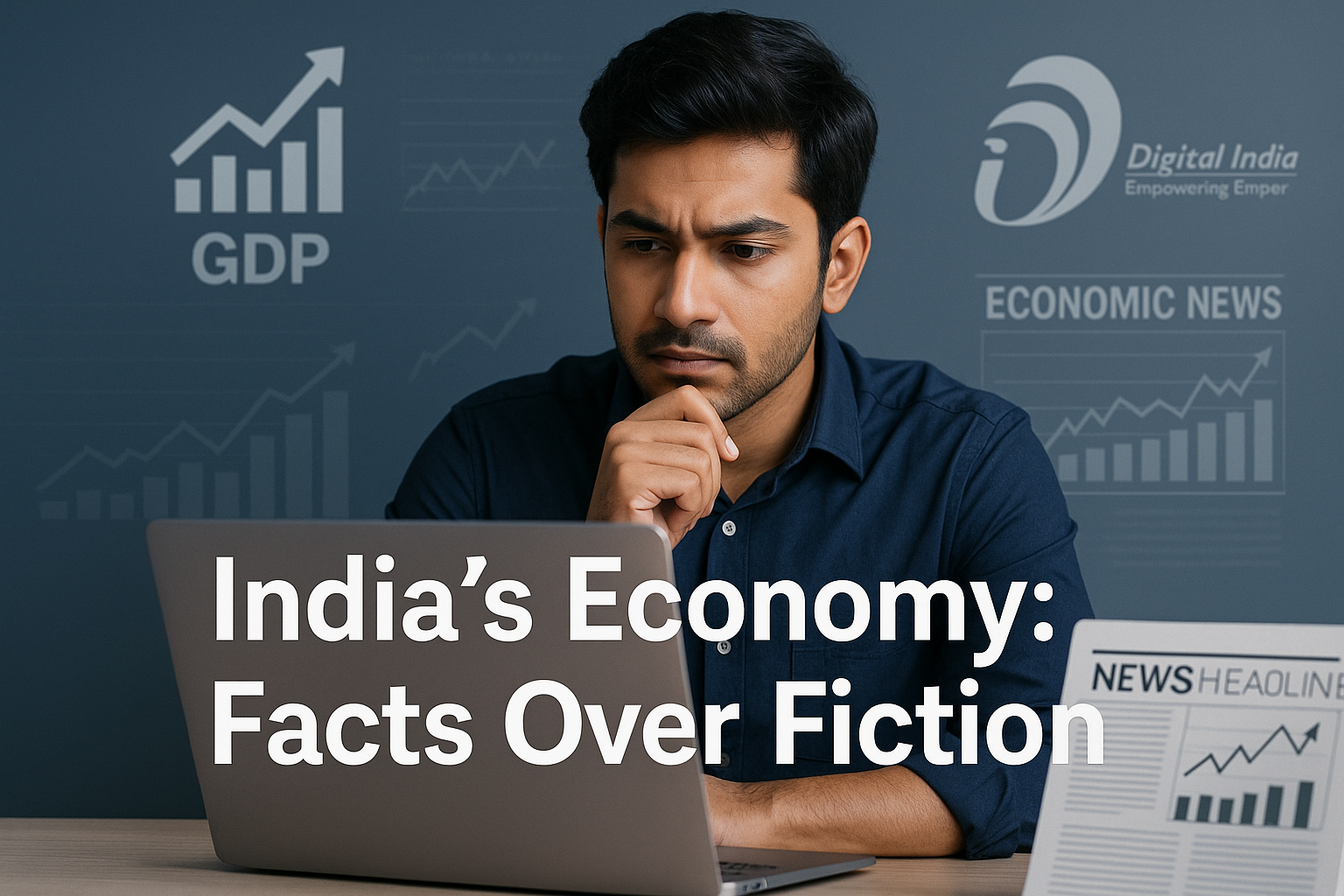
In an age where social media can amplify both truth and misinformation, one of the most debated topics recently emerged from an influencer’s bold statement: “India is a dead economy.” While this claim garnered thousands of views and sparked heated conversations online, it was quickly dismantled by a well-researched counter-post from another content creator, who broke down the myth in 7 key points backed with data and common sense.
So, is India’s economy really on the decline? Or are we simply witnessing the power of viral misinformation? Let’s take a closer look at this trending controversy and what it reveals about digital influence in 2025.
The Viral Claim: “India is a Dead Economy”
An unidentified influencer recently posted a video claiming that India is no longer growing, alleging:
- Lack of innovation,
- High unemployment,
- Collapsing middle class,
- And stagnation in the startup ecosystem.
These dramatic claims, made without context or credible sources, went viral—particularly among young netizens skeptical about the country’s progress. However, the viral nature of misinformation also opened the door for a fact-based rebuttal that quickly gained traction.
The Rebuttal: Breaking Down the 7 Points with Logic
An economist-turned-influencer took it upon himself to debunk the viral misinformation and restore perspective using 7 logical points:
1. GDP Growth Rate
India has consistently remained one of the fastest-growing major economies, with a projected growth rate of over 6.5% in 2025. The World Bank and IMF continue to rank India among top global performers despite global economic challenges.
2. Startup Ecosystem
India is now the third-largest startup ecosystem in the world, with over 110 unicorns and thousands of funded ventures. From fintech to agri-tech, innovation is thriving in Tier I and Tier II cities alike.
3. Unemployment Figures
While unemployment is a real concern, the labour force participation rate has shown improvement, especially in the informal sector. Government schemes like Skill India and Make in India are actively boosting employment across diverse industries.
4. Foreign Direct Investment (FDI)
India received record FDI inflows in 2023–24. Multinationals are investing in Indian manufacturing, real estate, and retail sectors. Amazon, Apple, Tesla, and global retail giants are scaling operations here—not exactly a sign of a “dead” economy.
5. Digital Infrastructure
With 5G rollout, UPI, ONDC, and IndiaStack leading the way, the country is being globally recognized for digital innovation. The influencer aptly noted, “No dead economy builds the kind of digital backbone India has.”
6. Youth Potential
India has the world’s youngest population—a demographic dividend that nations like Japan and Germany envy. With increasing access to education, tech skills, and digital platforms, youth-led entrepreneurship is on the rise.
7. Global Recognition
Major global leaders, from CEOs of Google and Microsoft to top investors, continue to call India the growth engine of the future. Economically, geopolitically, and technologically, India is playing an increasingly important global role.
The Role of Influencers in Misinformation
This incident is not just about economic data it’s about digital responsibility. Influencers today hold immense power. A single opinion, when shared without research, can create confusion or panic.
The good news is that we are seeing a new generation of influencers economists, educators, fact-checkers rise to counterbalance this. They use platforms like YouTube, Instagram, and LinkedIn not just to create content, but to educate and empower audiences.
What This Means for Indian Youth
As India steps into a new economic decade, it’s crucial for the youth to engage with data-driven narratives, not just trending hashtags. Before forming opinions, young Indians must learn to:
- Verify claims with credible sources.
- Understand the difference between critique and baseless negativity.
- Appreciate the nuances of a complex economy.
Conclusion
The claim that “India is a dead economy” may have gotten views, but it lacked substance. Thankfully, informed voices online are stepping up to separate fact from fiction. As citizens and digital consumers, we must recognize the difference between clickbait and constructive criticism.
India’s economy is not perfect but far from dead. It’s alive, growing, and adapting to global and domestic challenges. And with a billion dreams and digital tools in hand, it’s only getting started.